30 June 2026
Online or in-person music lessons: which is right for you?
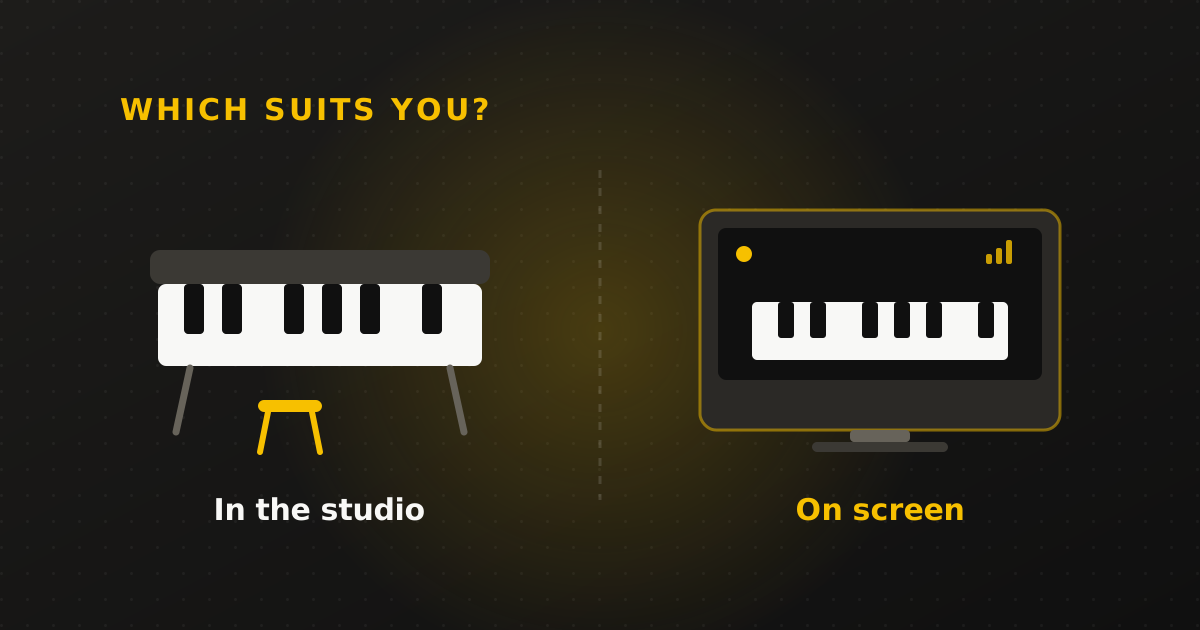
We teach both, so we have no stake in talking you into either. Both work. They suit different people, different instruments and different stages, and the honest answer depends on which you are.
Where in-person is genuinely better
The first few months on any instrument
Early technique is physical: hand shape, wrist height, posture, how a drum stick rebounds, how much air a reed wants. A teacher who can see you from the side and adjust your hand is worth a lot in the first months. Bad habits set fast and cost years to undo.
Young children
Under about ten, a screen competes with everything else in the room. In-person lessons hold attention better, and the teacher can read a child's frustration before it becomes "I don't want to play any more".
Drums, and anything about physical feel
Some things need to be in the room. Drums are the clearest case: the whole instrument is about feel, weight and rebound.
Where online is genuinely better
Theory
Music theory is a screen-friendly subject. Notation, ear training and analysis work as well online as in person — sometimes better, since the teacher can share a screen and annotate in real time.
Keyboard and piano at intermediate level
Once technique is established, a camera above the keys shows a teacher everything they need. Many of our keyboard students switch to online after the first year and lose nothing.
When travel is the obstacle
An online lesson that happens beats an in-person lesson that keeps getting missed because of traffic, fuel or the school run. Consistency matters more than format — a student learning online every week will overtake one attending in person twice a month.
Students outside Harare
If you are not in Harare, online is not a compromise, it is access. This is most of why we teach it.
What online actually needs
Online lessons work when the setup does. Realistically you need:
- A connection that holds a video call — mobile data is usually fine.
- A device you can position to show your hands, not your face. This is the one people get wrong.
- Headphones, so the teacher's playing does not feed back into your microphone.
- Somewhere to leave the instrument set up, so lessons do not start with ten minutes of furniture moving.
Camera angle is the difference between a good online lesson and a frustrating one. Your teacher needs to see the keys and your hands, from above or slightly to the side.
What does not change either way
Whichever you choose, the parts that determine progress are identical: a curriculum you can see, homework between lessons, and someone checking it. Our students get the same portal, the same assignments and the same progress tracking online or in the studio. The lesson is one hour; the portal covers the rest of the week.
You do not have to pick permanently
Plenty of our students mix the two — in-person while technique settles, online when the week is busy, back in the studio before a performance. Start in person if you are a complete beginner and it is practical. Otherwise start online and see how it goes.
Book a free trial either way and judge it for yourself.
Want to learn this for real?
Book a free trial lesson with JMG Music in Harare or online.
Book a free trial